Web Projects
Blog web app
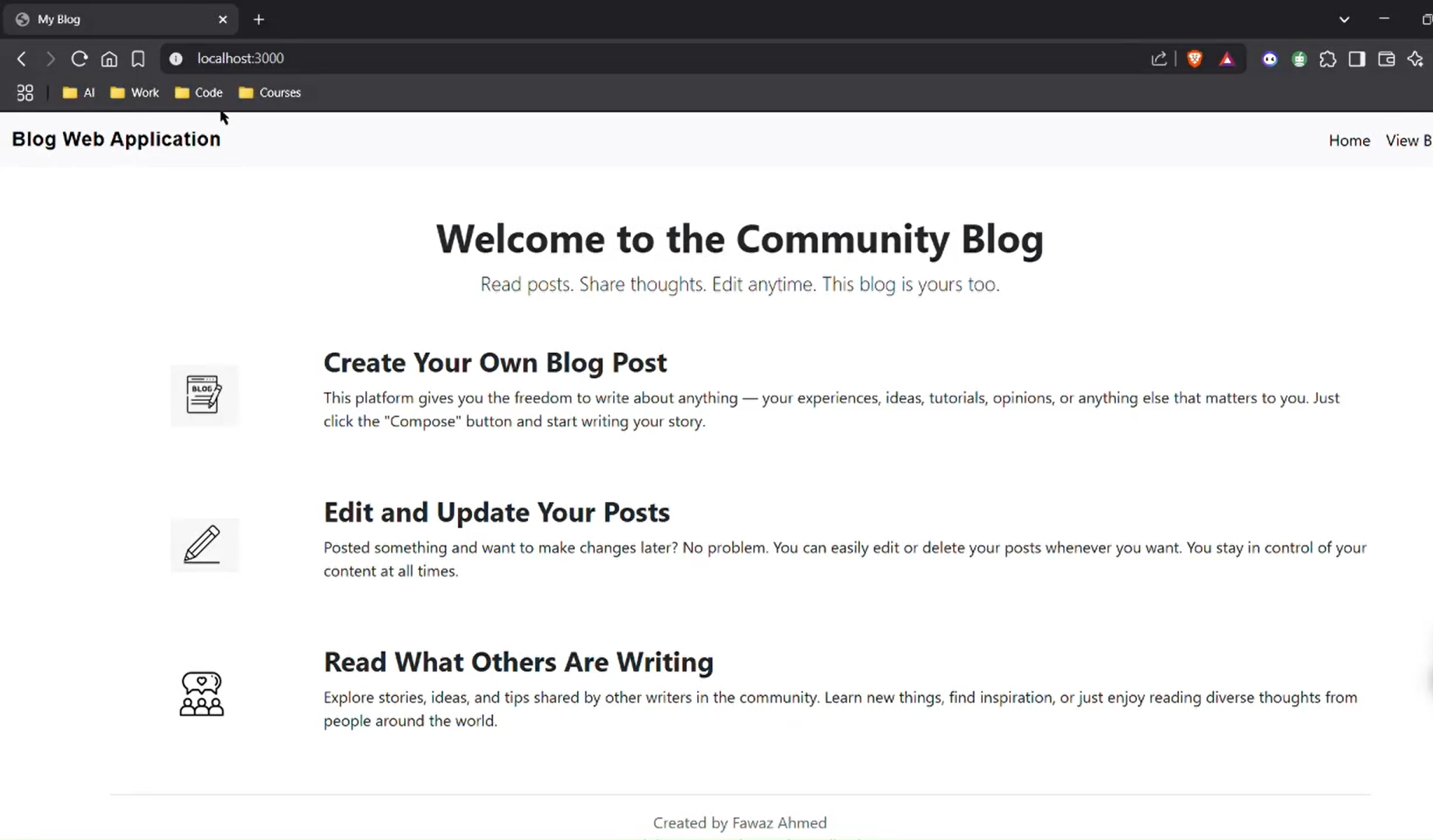 I developed a full-stack blog web application that allows users to create, read, update, and delete blog posts using Node.js and EJS. The application focuses on server-side rendering, clean routing, and a simple user interface that enables users to publish, edit, and manage content seamlessly.
- Complete CRUD Functionality: Users can create new posts, view existing ones, edit content, and delete posts dynamically.
- Server-Side Rendering with EJS: Implemented EJS templates for dynamic page rendering and smooth data flow between the backend and frontend.
Tindog website
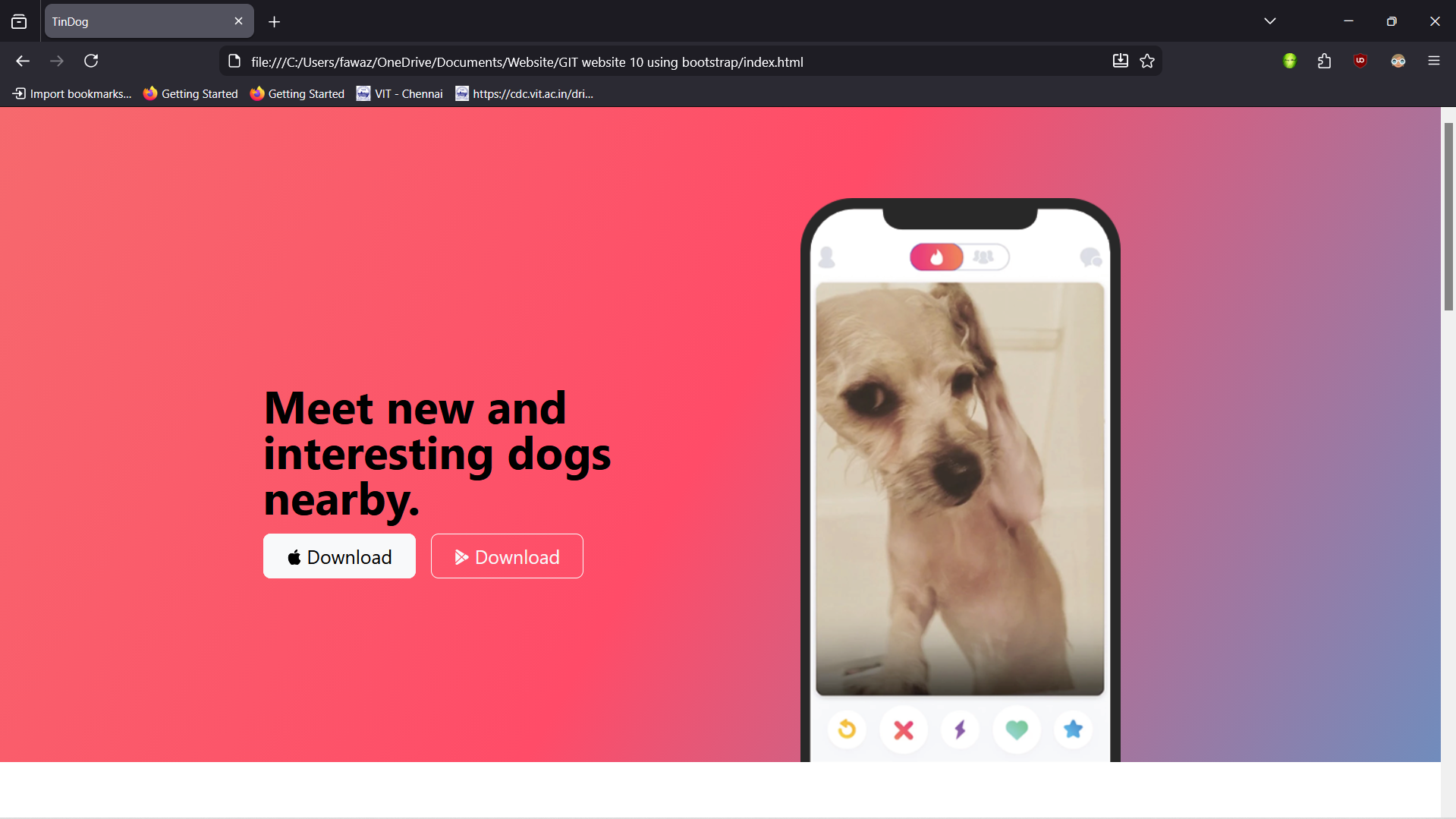 I designed and developed a responsive landing page for a dating app for dogs, focused on a fun, friendly, and visually engaging user experience. The website presents the app concept clearly using modern design elements while maintaining a clean and professional layout suitable for a real-world product launch.
- Responsive Design with Bootstrap: Used Bootstrap’s grid system and components to ensure seamless viewing across devices.
- Structured & Styled with HTML and CSS: Built with semantic HTML and custom CSS to create attractive gradients, typography, and a polished UI.
Dice game web app
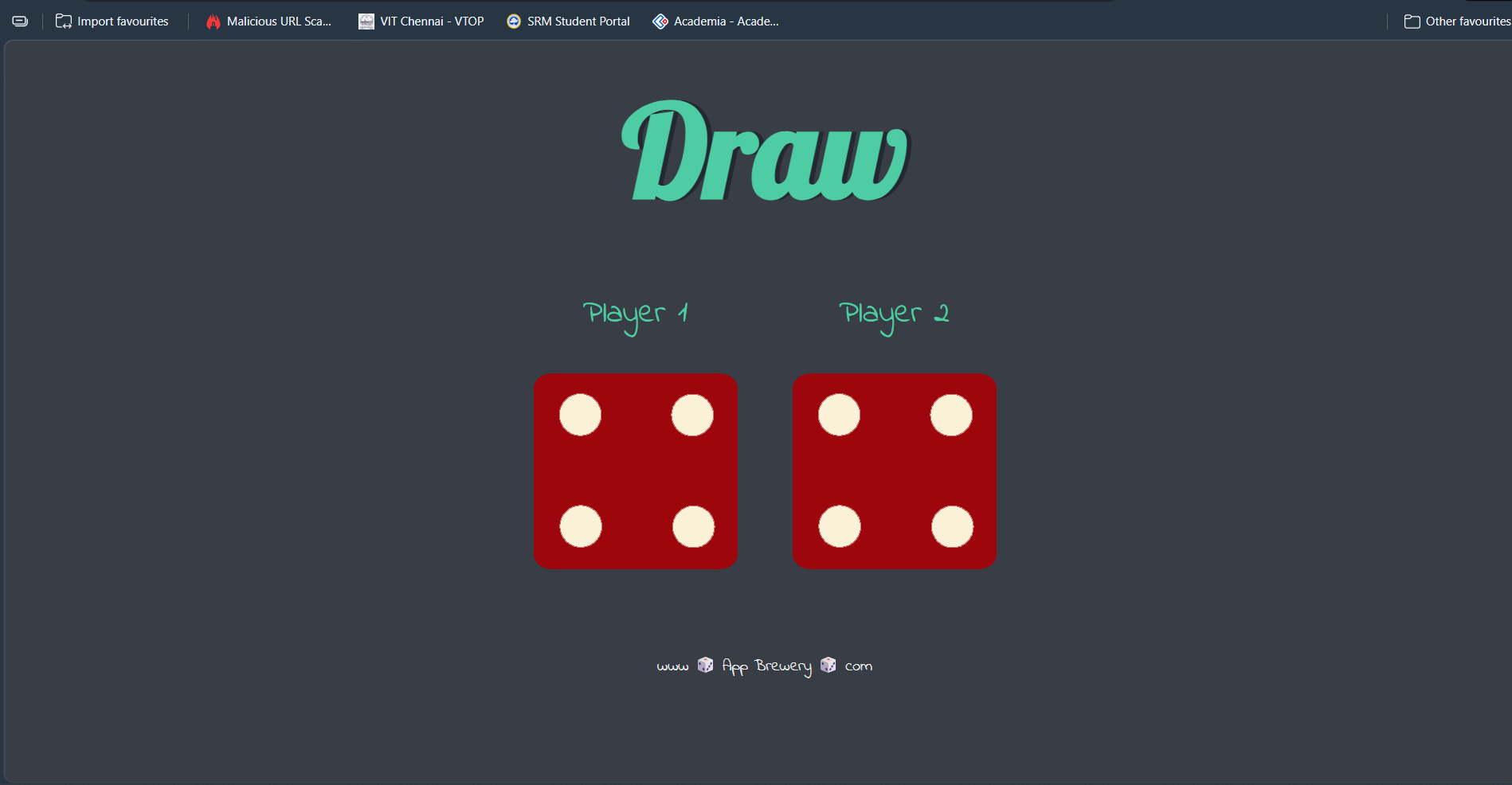 I developed a simple interactive dice game website that determines which player wins based on a random dice roll and clearly displays the result at the top of the page. The project focuses on clean visual representation, logical outcome display, and an engaging two-player comparison layout.
- Winner Display Logic: Compares dice values for Player 1 and Player 2 and shows the winner (or draw) prominently at the top.
- Clean Game UI: Uses a minimal, centered layout with visually distinct dice designs for easy understanding and user engagement.
Undergraduate Projects
Solid Waste Optimization Using XG-SAROpt
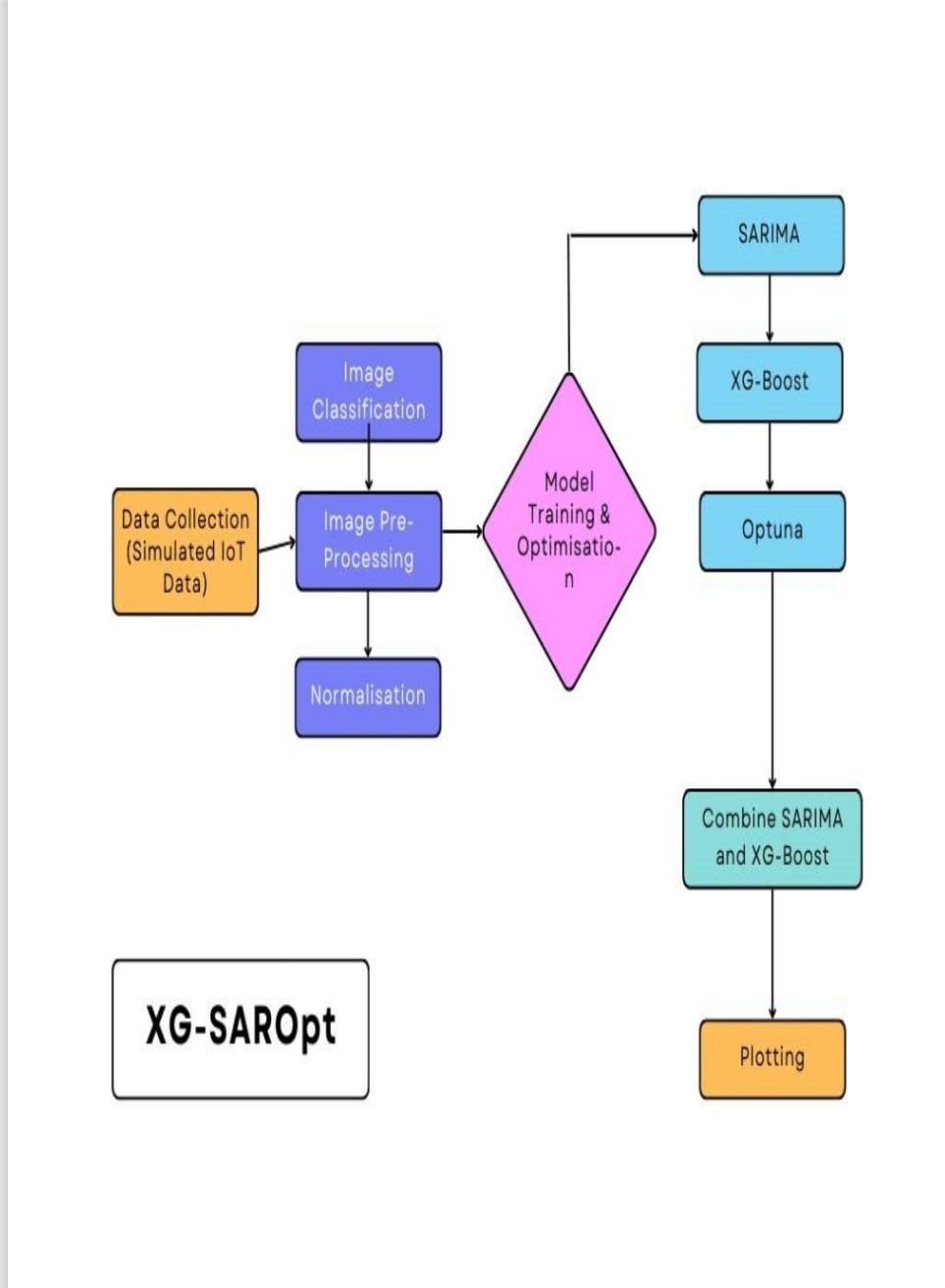 The project aims to improve traditional waste management systems by utilizing machine learning models like SARIMA and XGBoost. This will help predict waste generation patterns accurately, optimize collection schedules, and reduce operational costs, thereby promoting efficient, cost-effective, and sustainable waste management practices.
- The project uses machine learning to create a predictive waste management framework for urban solid waste management. It uses Kaggle datasets to simulate real-world waste generation scenarios and extracts insights from time-series data.
- The model uses SARIMA, XGBoost, and Meta-Regressor for forecasting waste generation trends. The optimization framework uses Optuna for hyperparameter tuning and dashboards for real-time visualization.
- The framework optimizes waste collection schedules, reduces operational costs, and promotes sustainable urban development.
Voice-Controlled and Obstacle-Avoiding Robotic Car
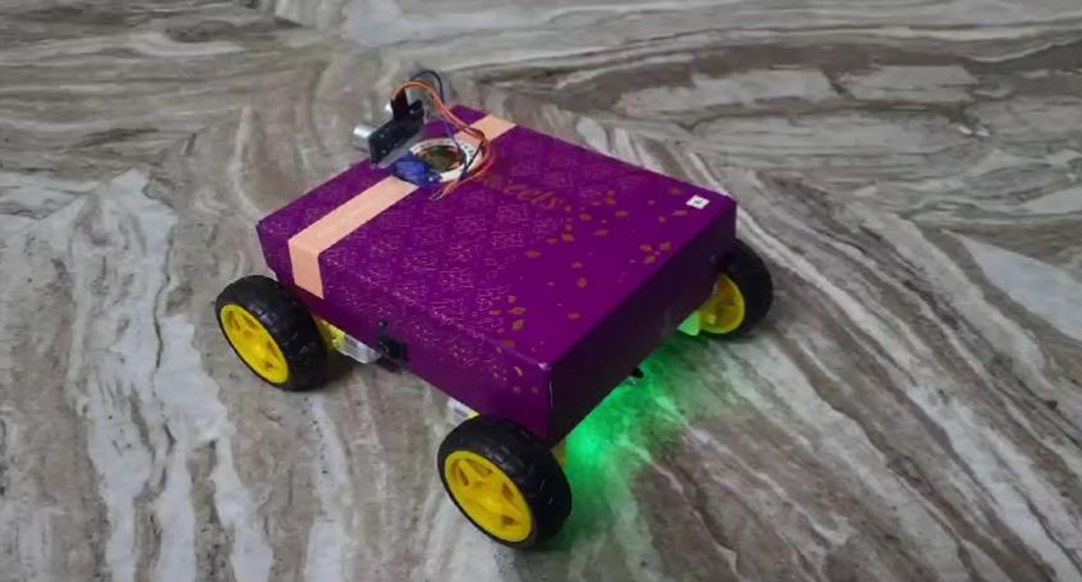 The project aims to create a robotic car that uses voice recognition and obstacle detection to enable safe navigation. Users can control the car's movements via a smartphone app, and it uses ultrasonic sensors to detect obstacles. The project focuses on accessibility and safety, allowing control without physical interaction.
Hardware requirements include:
- Arduino Uno microcontroller
- HC-05 Bluetooth module
- L298N motor driver
- ultrasonic sensor
- DC motors
- 12V rechargeable battery
Software requirements include:
The methodology involves pairing the HC-05 Bluetooth module with a smartphone, converting voice commands into text using Google's speech recognition technology, and controlling the motor driver. The ultrasonic sensors continuously monitor obstacles and initiate evasive actions if detected.
Temperature Controlled Fan Using Arduino
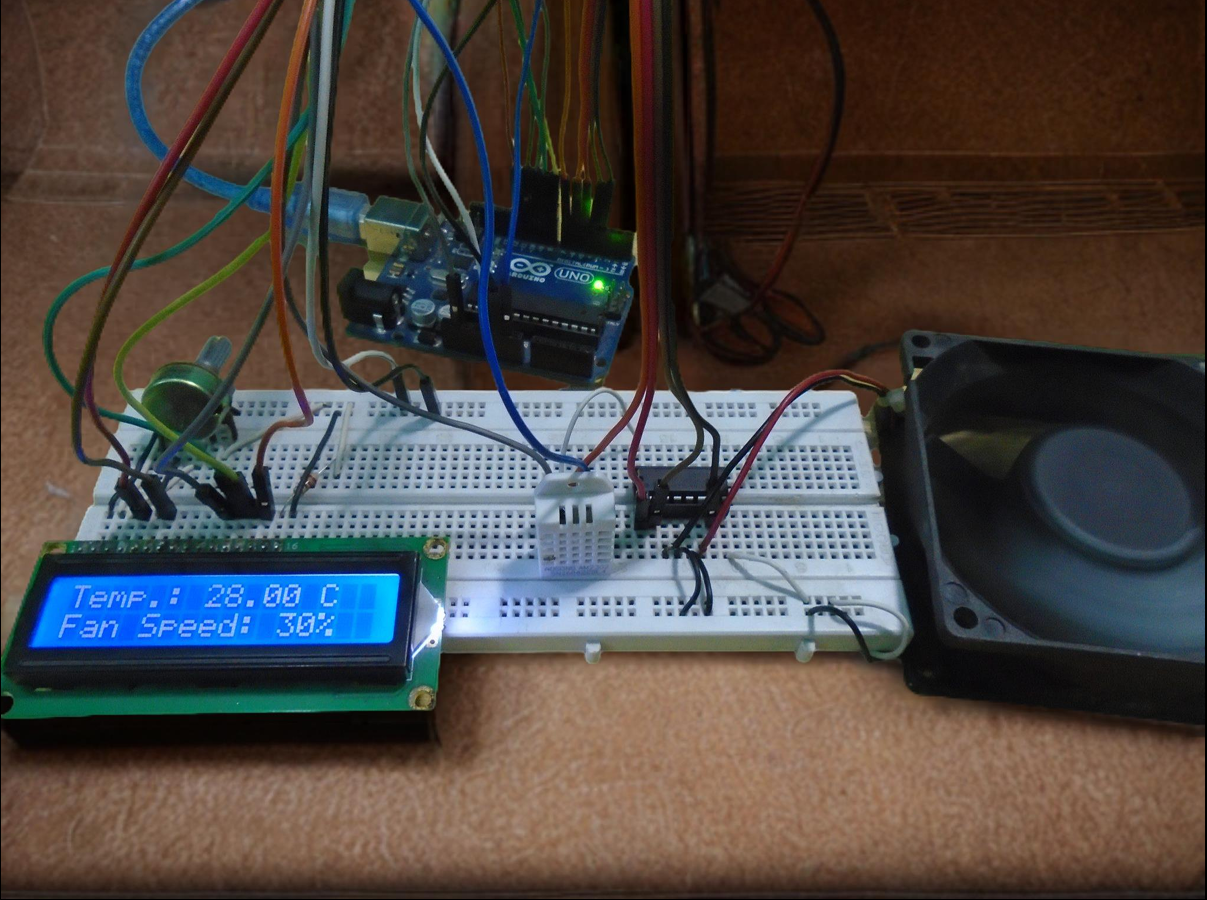 This project aims to create an energy-efficient fan system that automatically adjusts fan speed based on room temperature. It integrates an Arduino Uno microcontroller with a DHT11 temperature and humidity sensor, and uses PWM to dynamically control fan speed.
The system features real-time temperature monitoring, dynamic fan speed control, a user interface with a 16x2 LCD, and energy optimization by running the fan only when needed. The hardware includes an Arduino Uno, DHT11 sensor, 16x2 LCD, DC Fan, and a potentiometer for LCD contrast adjustment. The project is ideal for server rooms, households, and industrial environments, offering a modular design with potential for customization.
IoT-Based Drinking Water Quality Monitoring System
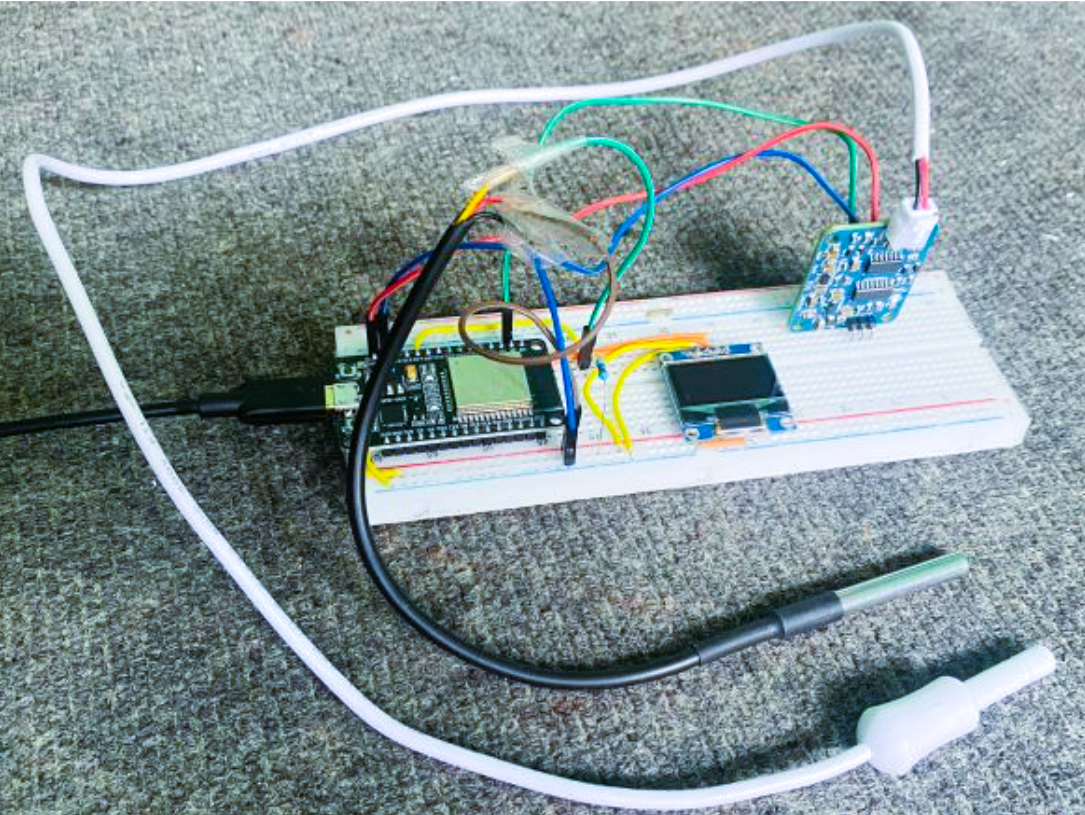 The project aims to create a real-time monitoring system for drinking water quality using IoT technology. The system measures key parameters like electrical conductivity and temperature, ensuring safe and high-quality drinking water.
The collected data is displayed on an OLED screen and transmitted to an IoT server for remote access and analysis. The system provides an automated, efficient alternative to traditional manual testing methods, complies with WHO guidelines, and uses hardware and software. The Thingspeak IoT platform stores and visualizes data, while the ESP32 ADC converts signals. This project contributes to the global goal of clean water and sanitation.
High-Performance Implementation of Next-Generation Aeronautical Communication Systems
The project aims to enhance safety, efficiency, and operational reliability in the aviation industry by utilizing advanced technologies like satellite-based communication, data link systems, and error correction techniques.
Key features include radio communication, satellite communication systems, data link communication, cockpit voice recorders, and advanced signal preprocessing techniques.
The project addresses challenges like frequency band congestion, security threats, and compatibility with existing systems. It highlights how modern aeronautical communication systems can revolutionize air traffic management, improve safety, and reduce environmental impact. Future scope includes 5G network integration for higher data rates and reduced latency, enhanced filtering and noise mitigation techniques, and expanded use in autonomous aviation systems and global air traffic management.